Introduction
A film director’s role is sometimes reduced to what happens on set.
But directing begins before the first shot and continues long after the final take.
The director’s responsibility is to protect the creative intention of the film throughout its entire journey.
From the first conversation to the final cut, every stage matters.
Concept Development
The process often begins with an idea.
That idea may come from a brand, agency, writer, producer or creative team.
The director’s role is to understand its potential.
- What makes the idea interesting?
- Where is the emotional opportunity?
- What could make it visually distinctive?
- What challenges might emerge?
This early stage can determine the direction of everything that follows.
Script and Story
A script provides structure.
But directors need to think beyond the words.
- What is happening underneath the dialogue?
- What does the character want?
- What should the audience notice?
- What can be communicated visually rather than verbally?
These questions help transform written material into cinematic storytelling.
Pre-Production
Once the creative direction is established, the director works with the production team to prepare the film.
This can involve:
- Casting
- Locations
- Storyboards
- Shot lists
- Visual references
- Production design
- Wardrobe
- Scheduling
- Technical planning
The objective is to make the creative idea achievable.
The Shoot
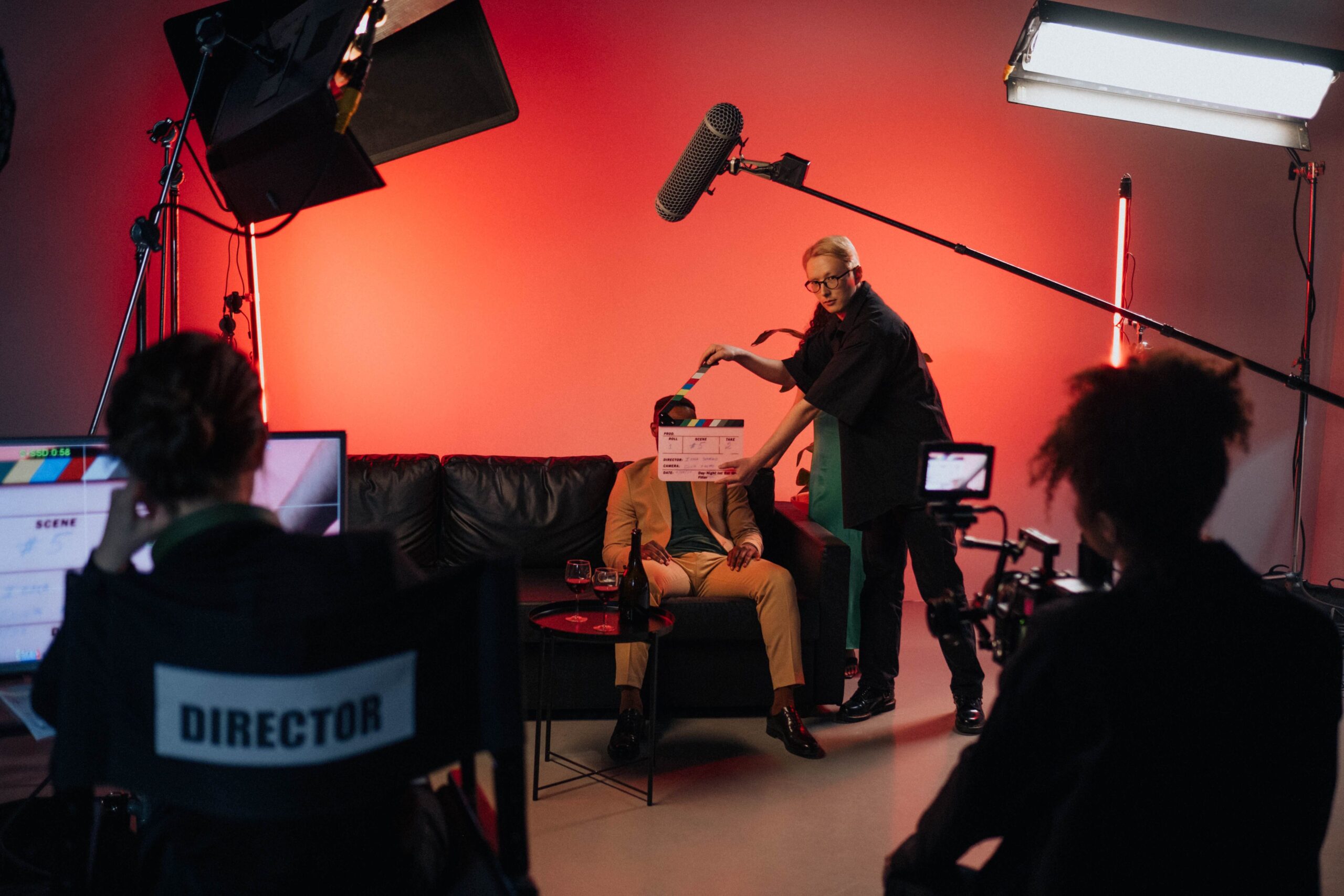
The shoot is where preparation meets reality.
The director works with performers, crew and creative departments to capture the film.
Decisions often need to be made quickly:
- Is the performance right?
- Does the shot communicate enough?
- Should the camera move?
- Do we need another take?
- Is the lighting serving the story?
These decisions require judgement rather than simply following a predetermined plan.
Working With the Crew
A director cannot create a film alone.
The quality of collaboration influences the quality of the final work.
The director needs to communicate clearly while allowing specialists to contribute their expertise.
The best productions create a shared sense of purpose. Everyone knows what they are trying to achieve.
Reviewing the Edit
Once filming is complete, the material becomes a film through editing.
This is where structure, pacing and performance are refined.
A director needs to evaluate every scene within the wider story.
A beautiful shot may still need to be removed.
A performance may work better with a different take.
A sequence may need to become shorter.
The edit is where difficult creative decisions often produce the biggest improvements.
Colour and Image
Colour grading shapes the final visual character.
It can establish consistency between locations and cameras. It can influence mood and emphasise certain elements within a frame.
But colour should support the visual concept rather than simply make every image more dramatic.
Sound
Sound is one of the most underestimated aspects of commercial filmmaking.
- Dialogue
- Atmosphere
- Sound effects
- Music
- Silence
All contribute to the final emotional experience.
A powerful image with weak sound can lose much of its impact.
A carefully designed soundscape can make a visual moment significantly stronger.
Final Delivery
Commercial films rarely have only one final format.
The project may require multiple durations, aspect ratios and versions.
The director needs to ensure that creative quality remains consistent across those outputs.
The hero film should feel connected to its shorter executions.
The Director as Creative Guardian
Across every stage, the director is protecting the central idea.
That doesn’t mean refusing change.
It means understanding why the film exists.
When compromises become necessary, the director needs to know which elements are essential and which can move.
That is creative leadership.
Final Thoughts
Directing is not simply about what happens when the camera rolls.
It is a continuous process of interpretation, decision-making and refinement.
The strongest directors remain connected to the story from the first idea through to the final frame.
Because the final film is only as strong as the decisions made along the way.